Summary: vFunction helps enterprises modernize large, complex .NET applications on AWS by giving AI coding tools the runtime context and refactoring guidance they need to break monoliths into smaller modules, upgrade frameworks, migrate databases to PostgreSQL, and reduce dependence on Windows and SQL Server licenses.
Enterprises that want to modernize their most critical legacy applications are increasingly looking to AI to help accelerate the journey on AWS. AI can help teams move faster, but complex modernization efforts still require the right context, guardrails, and architectural direction.
For organizations running important .NET applications, the decision is rarely simple. They are balancing the cost and constraints of Windows infrastructure against the opportunity to modernize toward a more flexible, cloud-native future.
Agentic Coding and Large Applications
That work gets harder when applications are large and complex. Out-of-the-box agentic systems can struggle here — but not because the AI itself isn’t capable.
Large codebases exceed what any context window can hold, so teams end up writing increasingly detailed prompts just to tell the AI what to change.
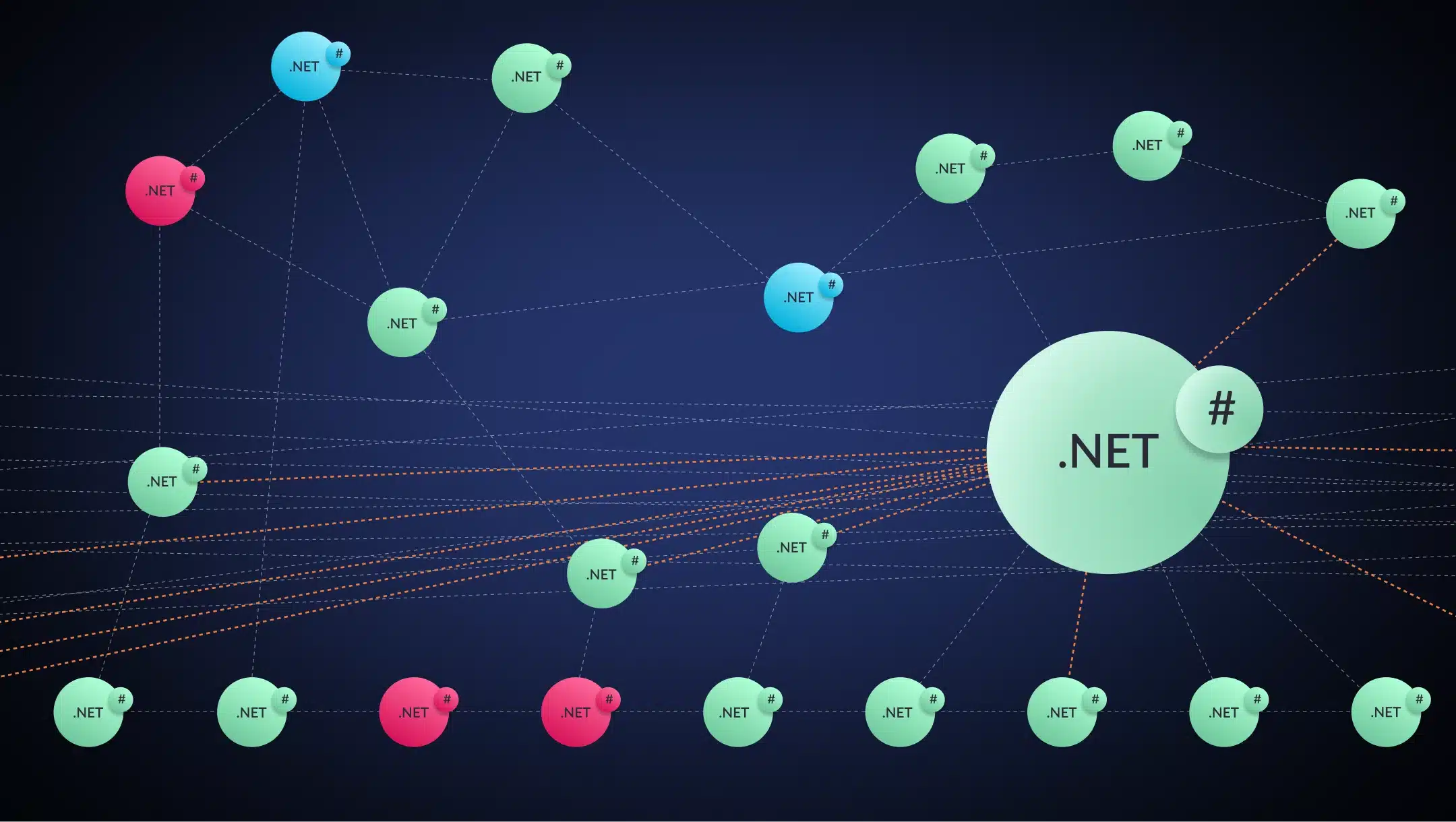
Agentic coding tools also lack runtime analysis, which is critical for large .NET applications. Without visibility into how the application actually runs, these tools miss dead code and dynamic dependencies, surfacing millions of static ones with no indication of those that actually matter for refactoring.
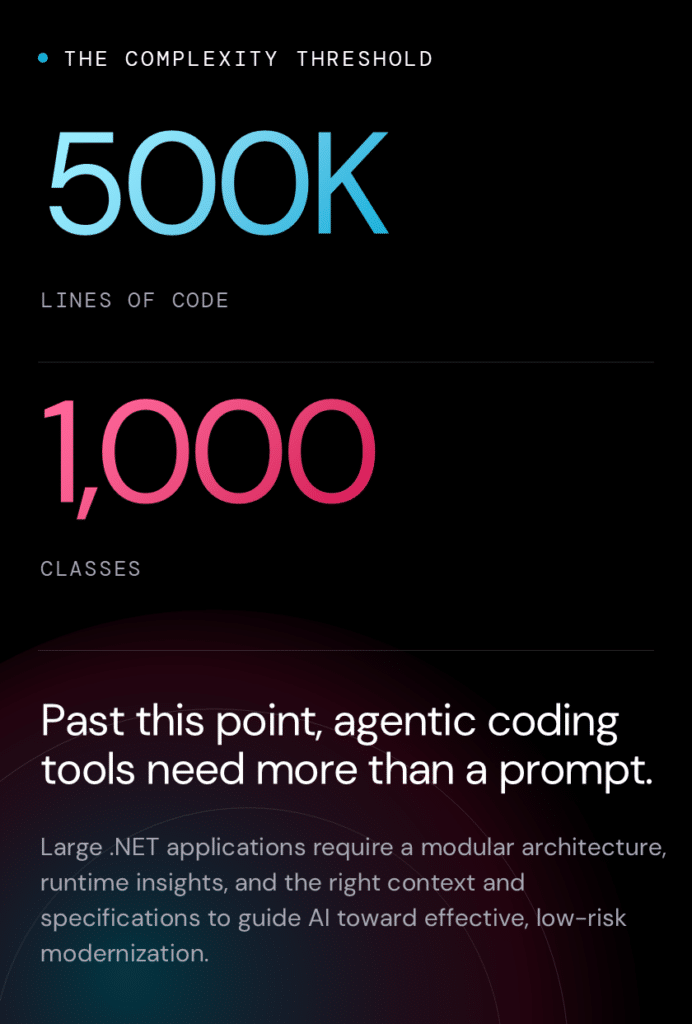
Once a codebase exceeds 500,000 lines of code or 1,000 classes, teams leveraging agentic coding tools need a modular architecture, runtime insights, and the right context, prompts, and specifications to guide AI toward effective, low-risk modernization.
vFunction’s Integration with AWS Coding Tools
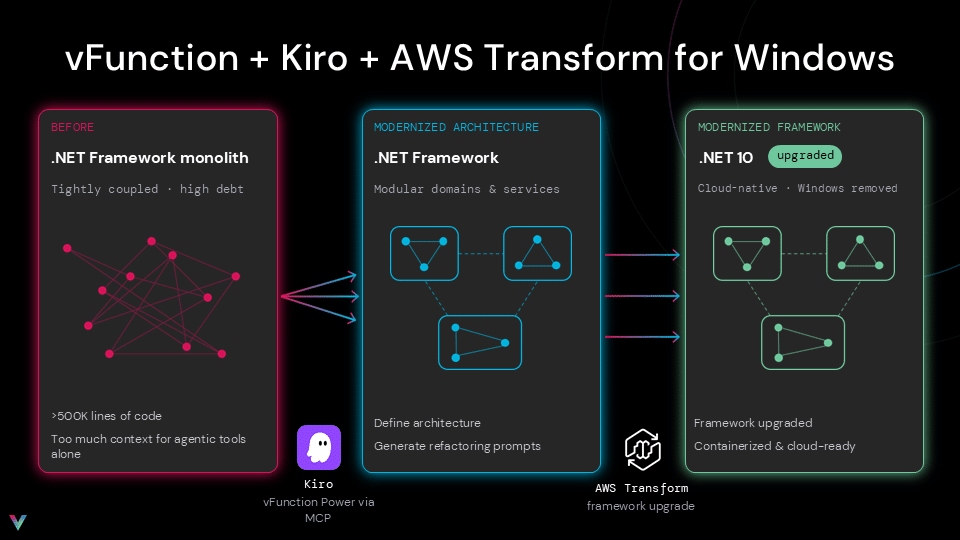
vFunction gives enterprises the context they need to drive effective AI-powered modernization for large applications. Using runtime analysis and proprietary data science, vFunction helps define the target architecture, shape the modernization plan, and generate detailed refactoring prompts that guide tools like Kiro and AWS Transform in breaking complex applications into smaller functional modules or services.
Once those applications are modularized, framework upgrades to .NET 10 and database migration to PostgreSQL become more straightforward and manageable. vFunction’s integration with AWS Transform supports a smoother, lower-risk transformation by reducing the tangled dependencies common in large monolithic applications.
By pairing modularization with framework upgrades, and database migration to PostgreSQL, vFunction makes full-stack Windows modernization more practical, repeatable, and effective. That gives AWS teams and enterprises a better path to modernize large .NET applications faster and with less risk.
The AWS & vFunction Partnership
“This partnership with AWS gives enterprises a practical path to modernize their most complex .NET applications, refactoring legacy code, upgrading to modern .NET, and reducing dependencies on Windows and SQL Server. The result is a cloud-native application foundation that’s easier to evolve, scale, and operate efficiently,” said Samantha Cartwright, VP of Alliances at vFunction.
“Together, AWS and vFunction provide an end-to-end .NET modernization solution that enables customers to move from legacy Windows applications to modern, cloud-native architectures faster and with less risk.”
-Rafael Reyes, AWS .NET Modernization Leader
“Modernizing .NET Framework applications does more than upgrade code. It helps customers reduce Microsoft licensing costs, remove Windows dependencies, and prepare for an AI-driven future. Together, AWS and vFunction provide an end-to-end .NET modernization solution that enables customers to move from legacy Windows applications to modern, cloud-native architectures faster and with less risk.” said Rafael Reyes, AWS .NET Modernization leader.
When to Use VFunction
For organizations planning a modernization initiative to remove Windows dependencies, vFunction should be brought in early, especially when the environment exceeds 1,000 classes or 500,000 lines of code. That early context can improve the odds of success and help teams move from complexity to execution.
Learn more about vFunction’s use cases and AI-driven modernization platform.