
Application modernization funding is surging. More than half of enterprise IT spending will shift from traditional solutions to the cloud by 2025, driven by long-term modernization initiatives, according to Gartner. But here’s the uncomfortable truth: most of these well-funded projects will still fail.
The stakes are higher than ever. In vFunction’s 2022 survey with Wakefield Research (250 IT leaders at companies with 5,000 or more employees), 79% reported at least one failed modernization project, at an average cost of about $1.5 million and 16 months. With this level of investment and risk, understanding why projects fail becomes critical.
The reason isn’t just a lack of resources or technical complexity. It’s that many organizations treat modernization like any other IT project—when in reality, it requires fundamentally different strategies. The patterns of failure are predictable, well-documented, and entirely avoidable if you know what to look for.
Why modernization projects are different
Traditional IT projects involve acquiring products, building applications, or implementing known technologies. Modernization is fundamentally different. You’re simultaneously dismantling existing systems while building new ones, managing technical debt while creating new capabilities, and transforming organizational practices while maintaining business continuity.
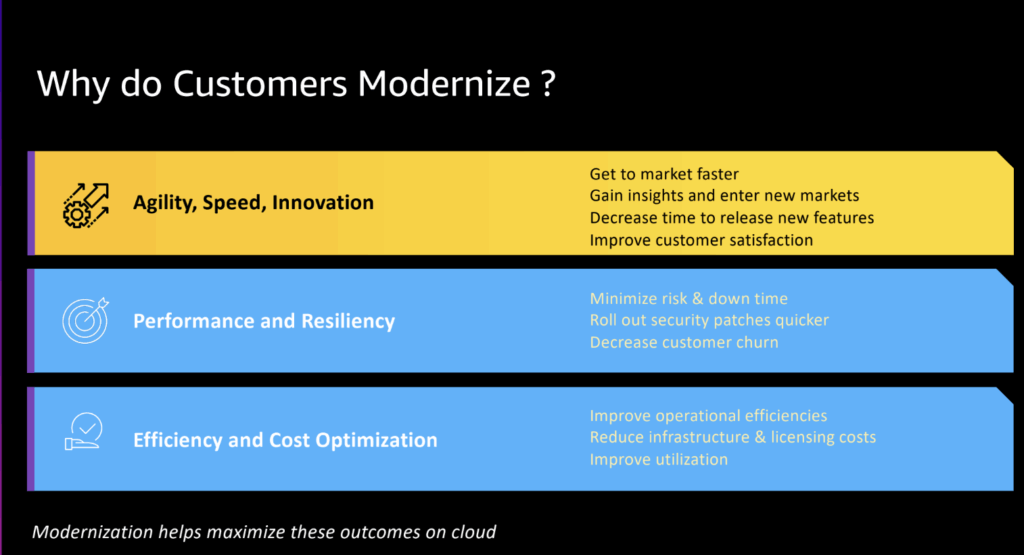
That complexity creates unique failure modes that catch even experienced IT teams off guard. Suboptimal approaches, inefficient processes, unexpected resistance, and project estimates that spiral out of control are the norm rather than the exception.
The good news? These pitfalls are entirely predictable. Here are the five most common traps and how to avoid them.
Pitfall 1: Treating modernization as purely technical
The problem: Organizations focus exclusively on technical transformation while ignoring the organizational changes required for success. They assume that if the technology works, the project succeeds.
But modern architectures require different skills, processes, and organizational structures (see table below). Moving from monoliths to microservices isn’t just a technical shift. It changes how teams collaborate, make decisions, and take ownership.
“It’s not really about having the tools, but frankly having the culture and capabilities in your organization to use those tools to make a difference to your customer and any other stakeholder you care about.”
Linda Hill, Harvard Business School, Leaders Must Engage with Emotions as Never Before
The skills gap makes this harder. As older technologies fall out of favor and experienced developers retire, organizations struggle to find talent familiar with outdated systems. Meanwhile, teams lack expertise in modern architectural patterns, creating a dangerous knowledge vacuum during critical transitions.
The solution: Invest in organizational change alongside technical changes. This means comprehensive training programs, mentorship for new architectural patterns, and evolving business processes to match new technical capabilities. Most importantly, establish clear governance models and ownership structures for distributed architectures before you need them.
Close the skills gap by cross-training existing team members and bringing in external expertise during the transition period. Don’t assume teams can learn new architectural patterns while executing complex migrations.
Managing a monolith vs. a distributed architecture
| Area | Monolith | Distributed (Microservices, etc.) |
| Deployments | All modules ship together, slower cadence | Independent deployments per service, faster but harder to coordinate |
| Testing | Single test suite, easier integration coverage | Requires contract tests, end-to-end tests across many services |
| Debugging & Troubleshooting | One process, stack traces are straightforward | Failures span services; needs distributed tracing and correlation IDs |
| Observability | Central logs and metrics | Per-service logs/metrics/traces, stitched together |
| Resilience | In-process exceptions, retries | Network failures, circuit breakers, timeouts, retries, service meshes |
| Latency | In-process calls, predictable | Multiple network hops, variable latency; tail latencies matter |
| Data & Transactions | One DB, ACID transactions across modules | Multiple DBs, eventual consistency, sagas/outbox patterns |
| Scaling | Scale the whole app | Scale each service independently, isolate hotspots |
| Team Ownership | One team or tightly coupled groups | Many teams own services; requires strong ownership boundaries |
| Governance & Drift | Architecture evolves slowly, easier to enforce | Rapid drift risk; needs guardrails, policy-as-code, and ongoing governance |
Pitfall 2: The “modernized legacy” trap
The challenge: Many organizations choose lift-and-shift or replatforming approaches that move applications to modern infrastructure without addressing underlying architectural limitations. Microsoft’s 2025 survey found that 74% of workloads that have already migrated are candidates for modernization, indicating that most initial migrations fail to fully leverage cloud-native capabilities. This creates “modernized legacy systems” that run on cloud platforms but perpetuate the same operational constraints as the original monoliths.
These systems look modern on paper, but fail to deliver the scalability, agility, and cost benefits that drove the modernization initiative. “Cloud shock” is a term some use when they move to the cloud, but don’t realize its benefits. Too often, organizations end up with higher infrastructure costs and the same deployment bottlenecks, integration challenges, and maintenance burdens they started with.
The solution: Recognize that true modernization requires architectural transformation, not just infrastructure migration. Lift-and-shift can provide short-term benefits like improved availability and centralized management, but it should be viewed as a stepping stone, not the end goal.
Plan for deeper refactoring or rebuilding efforts that address core architectural constraints present in your application. Focus on breaking down monolithic structures, implementing proper service boundaries, and adopting cloud-native patterns that enable real scalability and operational efficiency.
>>See how vFunction helps teams move from monoliths to microservices
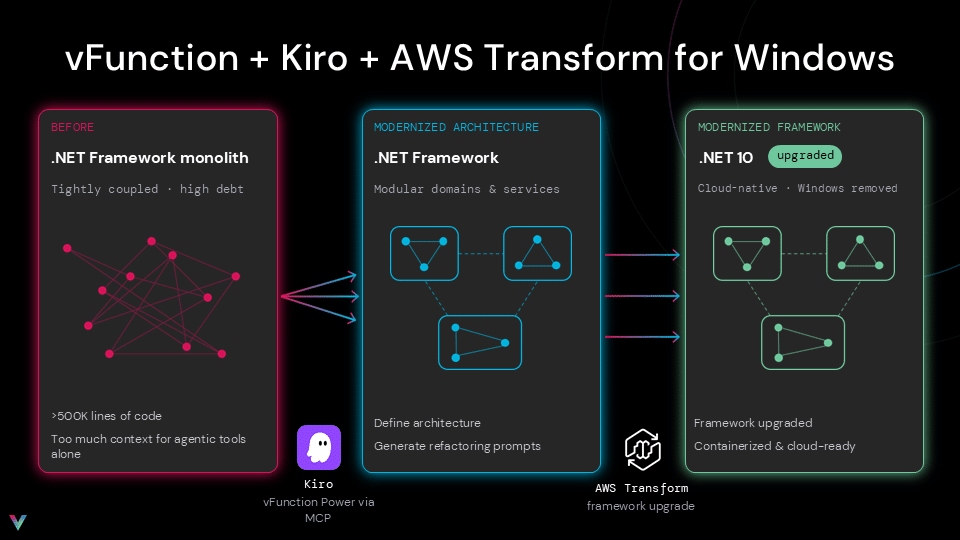
Migrated is not modernized. Lift-and-shift trades one set of monolithic problems for another. The application runs on new infrastructure with the same coupling, the same startup time, and the same inability to change one part without retesting all of it. The bill is often higher than the business case, because a monolith cannot use elasticity: it scales as one unit or not at all. If the migration finished and the feature backlog did not move, this is the pitfall.
Pitfall 3: Trying to modernize everything
The challenge: Counter to the previous pitfall, some organizations over modernize. A blanket “modernize everything” approach often targets ideal architectures rather than actual problems. This creates extra modernization tracks, inflates costs, increases operational overhead and causes projects to stall or fail.
The solution: Modernization should be problem-driven and value-led: prioritize the smallest set of changes that directly solve the KPI you care about. Avoid broad, generic rewrites or unnecessary architectural granularity. Some examples:
- If engineering velocity is the constraint: Decompose the monolith into a few independently testable modules, add CI/CD and automated tests for those modules. No full infrastructure rewrite required.
- If database licensing costs drive the change: Migrate to a lower-cost database engine or tier. There is no need to containerize or re-architect the whole application.
- If scalability/resilience is the issue: Split into a minimal number of “macro” services that must scale independently. Avoid overly fine-grained domain splits that increase operational burden.
- If the UI needs modern APIs: Expose a modern facade layer (e.g. replace Struts Actions with Spring Web Controllers) rather than converting the entire backend into microservices.
Keep modernization lean, measurable, and tightly scoped. Modernize to solve validated problems, not to chase theoretical purity.
The qualifier is size. Past roughly 500,000 lines of code or 1,000 classes, the application is the one to start with, and the one where an unaided AI coding tool will struggle.
Pitfall 4: Losing architectural certainty
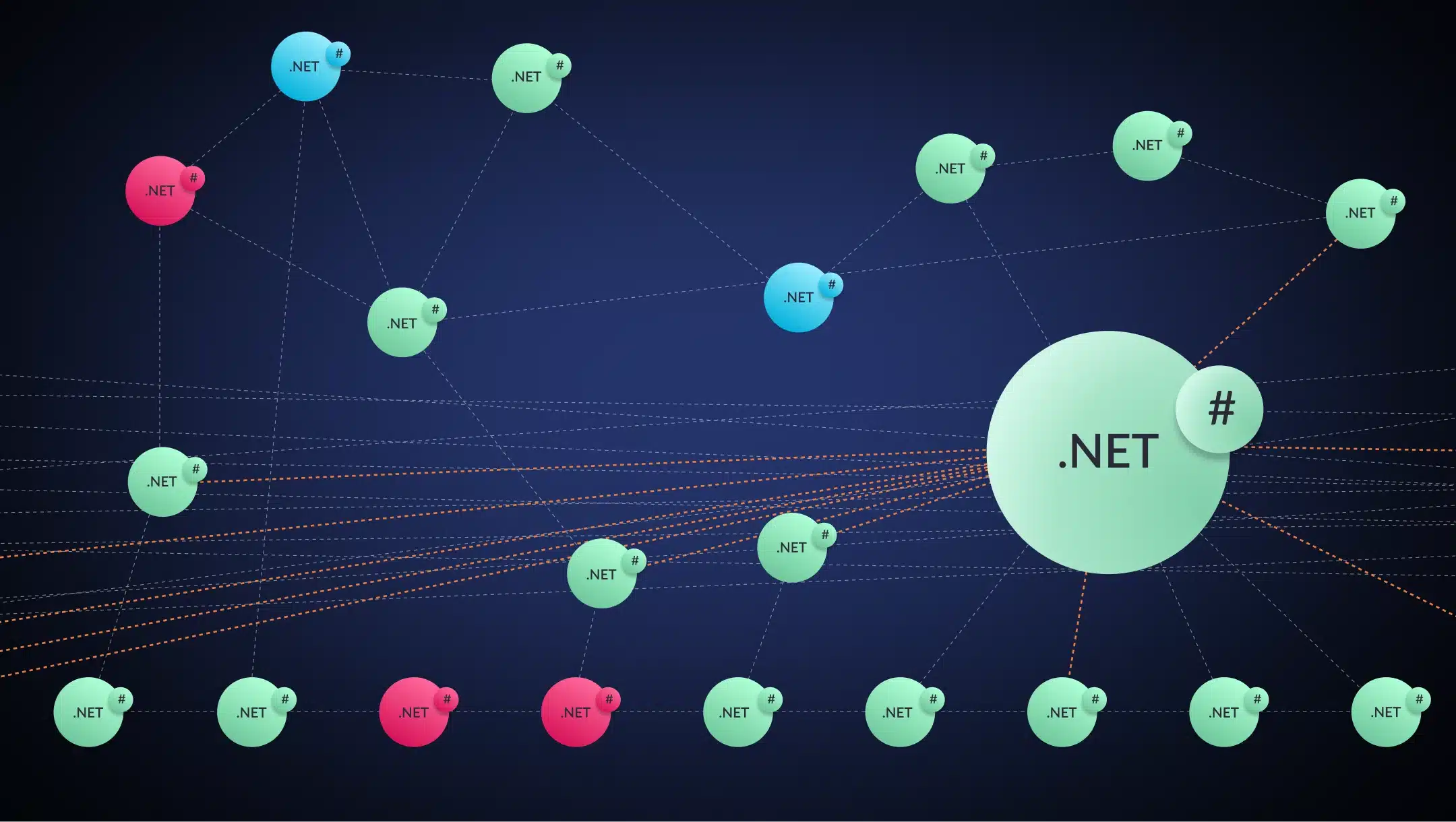
The challenge: As applications become more distributed through modernization, maintaining architectural oversight becomes exponentially harder. What starts as a clear transformation plan quickly becomes an unmanageable web of services, dependencies, and integration points.
Teams lose track of how components interact, which services own what data, and how changes in one area impact others. This architectural drift creates operational complexity that can exceed the benefits of modernization itself.
The problem is compounded by microservices sprawl. Teams new to microservices often overcorrect, creating too many poorly designed services without proper governance. What should be a carefully planned decomposition becomes an explosion of small services that are harder to manage than the original monolith.
The solution: Build observability into your modernization strategy from day one. Establish governance frameworks and standards before you start decomposing monoliths. Keep documentation and architectural decision records current, not as an afterthought, but as a core deliverable.
Define clear service boundary guidelines based on business domains, not technical convenience. Establish consistent operational patterns and automation from the start. Implement strong data management and consistency strategies before you need them. Actively monitor and document service relationships and dependencies. Complexity will grow faster than you expect.
CTA: See how vFunction helps organizations manage their distributed architectures.
Pitfall 5: Ignoring AI integration requirements
The challenge: Most modernization efforts focus on current needs without considering how applications will need to evolve to support AI capabilities. The result: technical debt that forces another round of modernization just as the first one ends.
AI demands architectures that support real-time data processing, rapid API integrations, and continuous deployment. Even replatformed systems often lack the architectural flexibility needed for these workloads.
Organizations that don’t plan for AI integration find themselves needing another round of modernization just as they finish the first one. This is particularly problematic given the rapid pace of AI advancement and the competitive advantages it provides.
The solution: Build AI readiness into your modernization strategy from the start:
- Design for real-time data access
- Embrace API-first architectures vs older protocols/methods, and
- Opt for deployment patterns that support rapid iteration and testing.
Think ahead: how will your applications connect with AI services, process streaming data, and adapt through continuous learning? Plan for these capabilities now so you’re ready when the business needs them.
The organizational pitfalls nobody budgets for
The technical pitfalls above are the visible ones. The projects in our 2022 survey that failed mostly failed for organizational reasons, and those are worth naming.
No one owns it at the top. Modernization competes with features for the same people. Without an executive sponsor whose name is on the outcome, features win every quarter.
The team structure does not change. Conway’s Law works in both directions: an application organized around one team stays a monolith no matter how it is deployed. Decide which teams will own which domains before the first domain is extracted.
Expectations are set on the wrong unit. “Modernize the application” is a multi-year statement. “Modernize the billing domain, with tests that prove it behaves like the old one” is a quarter. Set expectations one domain at a time and the project becomes a sequence of visible wins instead of one long absence.
The skills gap is real but misdiagnosed. The scarce skill is not cloud or containers. It is knowing what the existing application actually does. AI coding tools can write the new code; what they need is the specification, and that has to come from how the application runs today, not from the people who remember writing it.
Getting modernization right
The difference between successful and failed modernization projects often comes down to preparation and perspective. Technical challenges are solvable with the right tools and expertise. Organizational challenges require intentional design and sustained commitment. Adopt the “Minimum Viable Modernization” mindset. Implement the smallest change that materially improves the target KPI. Modernize incrementally – measuring benefits after every iteration.
Start by acknowledging that modernization will change how your organization works, not just what technology it uses. Plan for that change, invest in it, and measure its impact alongside your technical metrics.
Where vFunction fits
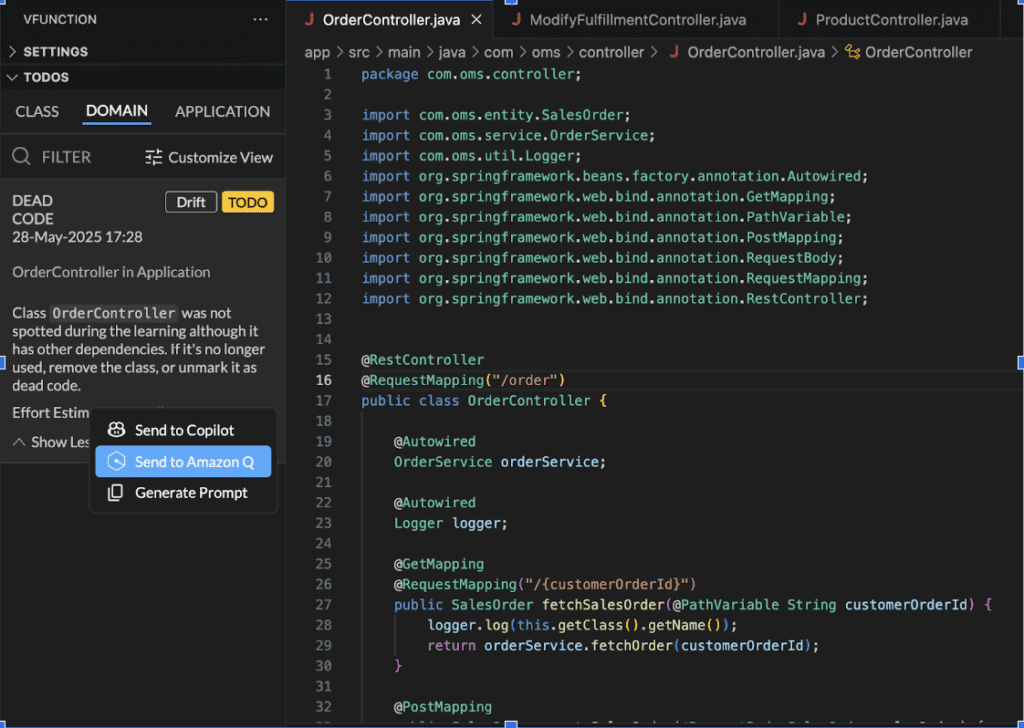
vFunction gives AI coding tools the context and guardrails they need to refactor, rewrite, and modernize existing systems with speed, accuracy, and control. It captures how the application actually runs in production, helps your architects define the target architecture, and produces a specification and integration tests for each domain, so Kiro, Claude Code, AWS Transform, and other AI coding tools work one domain at a time under your team’s review. vFunction’s engineers run the process with your team until your team can run it alone.
With $1.5 million average project costs and high failure rates, organizations can’t afford to repeat the same mistakes. The organizations increasing their modernization budgets in 2025 have the right instinct. But a budget alone won’t guarantee success. Understanding these pitfalls and designing around them from the start will.
Keep learning: Refactor, rearchitect, or rewrite? · Why app modernization projects fail (Wakefield report)