Most enterprise applications weren’t built for the cloud. They were designed for data centers where scaling meant bigger hardware and microservices were theoretical. Today, those same systems support companies that must move fast, scale globally, compete with cloud-native startups, and adopt AI-powered experiences that demand low latency, clean APIs, and modern architecture. A simple lift-and-shift can move these systems to the cloud, but it leaves their underlying architecture and its limitations unchanged.
AWS now sits at the center of nearly every enterprise conversation about migration and modernization. As the leader in the market, the question isn’t whether to modernize on AWS; it’s how to do it without breaking the applications the business depends on. Success hinges on understanding your options, having a clear strategy, and utilizing the right tools to execute efficiently.
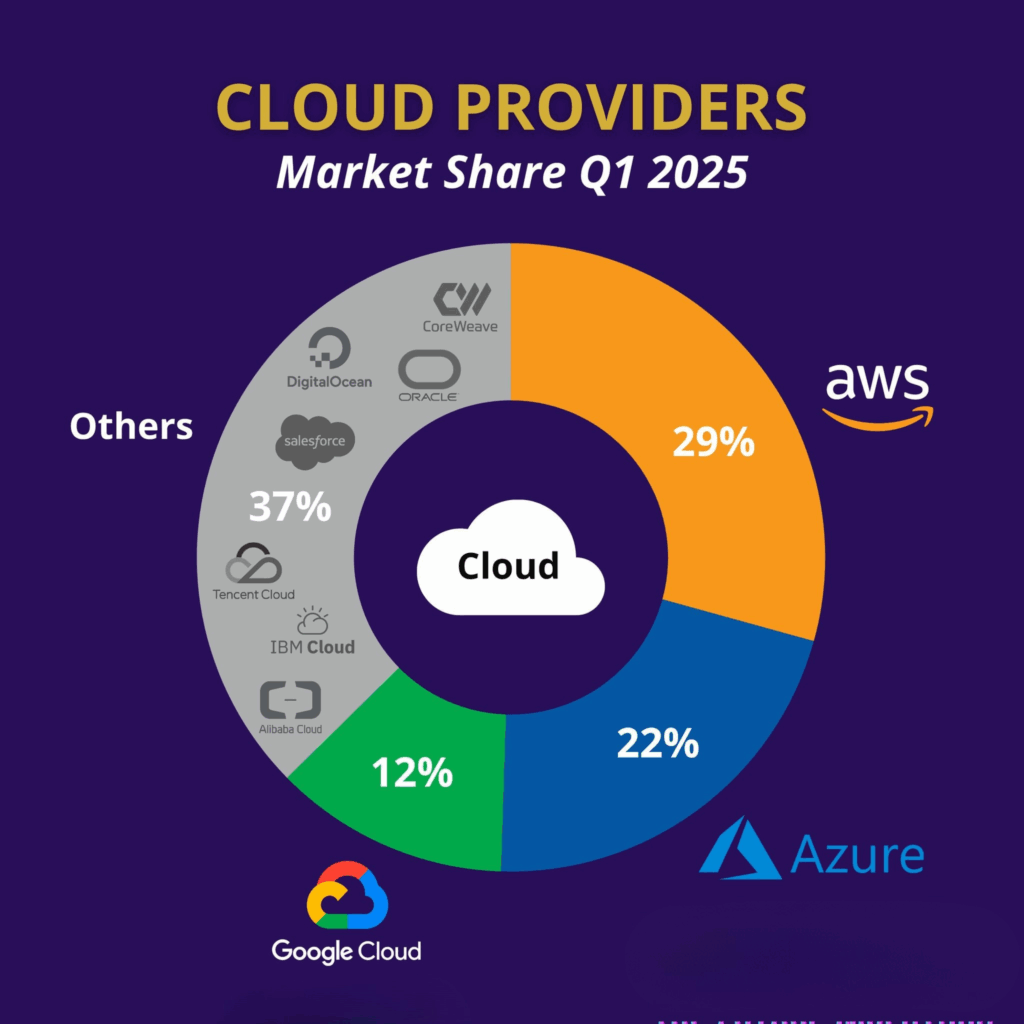
Worldwide market share of leading cloud infrastructure service providers, 2025. Source Statista, Synergy Research Group. Image source: SlickFinch
This guide covers everything you need to know about modernizing applications on AWS, from core strategies to the AWS and partner tools that can accelerate your journey. You’ll learn what works, what to avoid, and how to automate the most time-consuming parts of the process.
What is AWS application modernization?
Modernizing on AWS means transforming legacy or overly complex applications to take advantage of cloud-native capabilities, making them more resilient, scalable, and maintainable with less operational drag. Modernized applications are also equipped to support emerging AI workloads. It’s not just “moving to AWS.” It’s rethinking how applications are architected, deployed, and operated to reduce costs, strengthen security, and maximize the value of the cloud.
Modernization may include breaking down monoliths into microservices, containerizing applications to improve portability, adopting serverless patterns, or refactoring code to eliminate technical debt that has accumulated over time. Modernization is a spectrum: sometimes, extracting one or two services or containerizing an app delivers outsized value.
While most AWS application journeys include phases such as assessment, migration, modernization, and ongoing management, this guide focuses on modernization, the phase where long-term value is realized. Migration gets applications onto AWS; modernization determines how effectively they can scale, evolve, and support new capabilities over time.
Migration vs. modernization: the crucial distinction
People use these terms interchangeably, but they’re fundamentally different. Migration moves applications to AWS; modernization transforms them once they’re there.
Migration moves applications from one environment to another, usually from on-premises data centers to AWS. The focus is on getting workloads into the cloud with minimal change. Think rehosting virtual machines (VMs) to Amazon EC2 (Elastic Cloud Compute), replicating databases to Amazon RDS (Relational Database Service), and mirroring network configurations. It’s about where your applications run.
Modernization typically unfolds in steps.
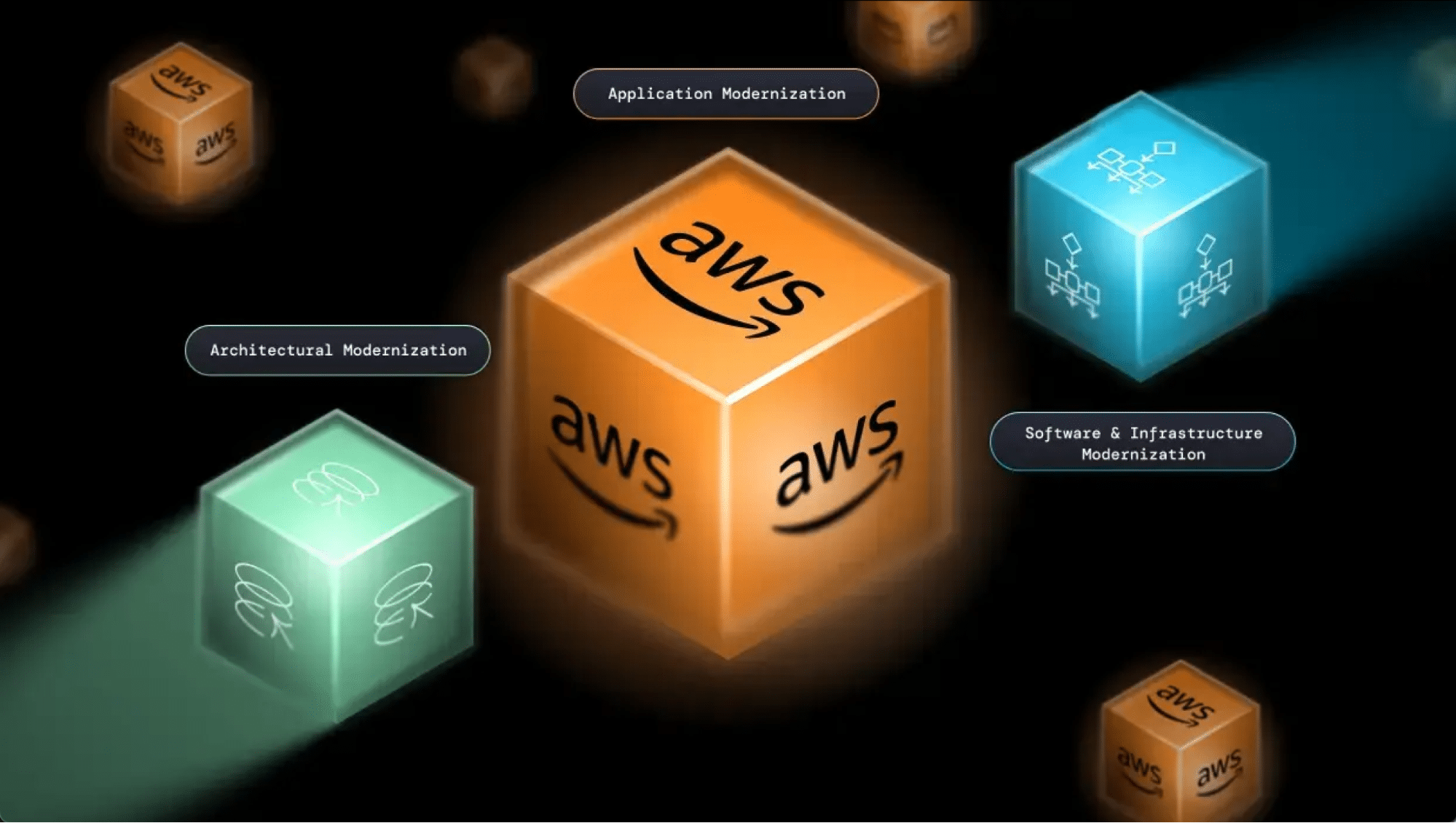
Teams often start with software and infrastructure modernization, upgrading frameworks, addressing security and compliance issues, reducing licensing costs, and moving to managed cloud services. This stage stabilizes the application and removes immediate friction.
Then organizations undertake architectural modernization. This involves restructuring monolithic applications into modular or microservices-based designs to fully leverage cloud-native services, such as Amazon EKS (Elastic Kubernetes Service), AWS Lambda, and event-driven architectures. It’s this architectural shift that enables greater scalability, resilience, and faster delivery.
Migration often comes first to stabilize costs and infrastructure. Modernization, specifically, architectural modernization, is designed to unlock agility, cost savings, and long-term value.
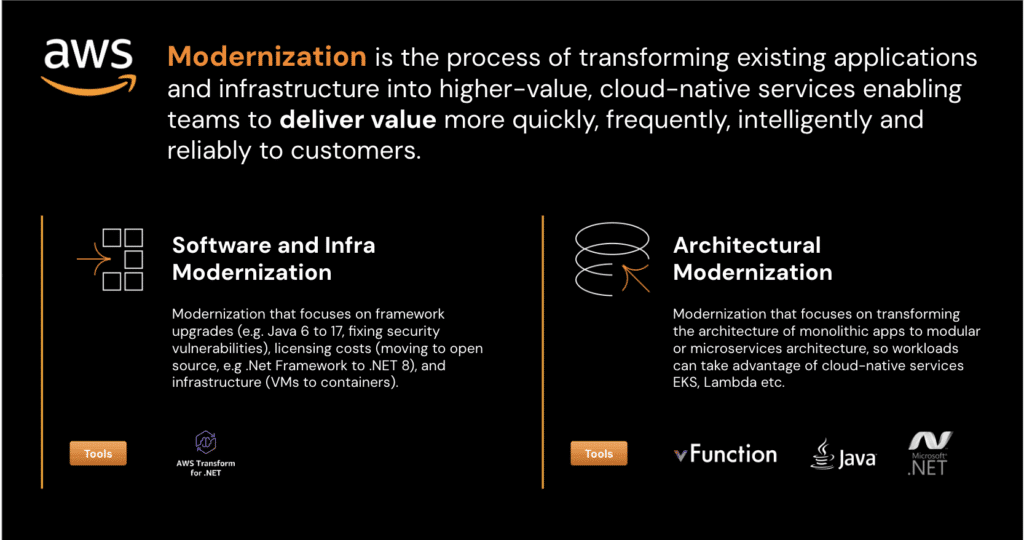
Migration and modernization often happen in sequence: Phase 1: move. Phase 2: evolve.
Here’s a simple way to visualize it:
| Goal | Migration | Modernization |
| Primary focus | Infrastructure relocation | Transform how software is built and operated |
| Typical timeline | Weeks to months | Continuous improvement with value delivered every sprint |
| Effort type | Lift-and-shift, rehost, replatform | Refactor, selectively re-architect, replace where it adds value |
| Business outcome | Fast cloud adoption and initial cost optimization | Sustained cost reduction (often 30–50%+), faster and more reliable releases, and the ability to change software without breaking it |
| Long-term impact | Application complexity moves to the cloud, unchanged and harder to manage | Complexity is actively reduced release after release |
| Example | Move app servers to EC2 and database to RDS | Enable independent services, remove hidden dependencies, and ship changes without cascading failures |
Migration gets you started. Modernization is what makes the move matter.
The benefits of modernizing applications on AWS
Moving applications to AWS EC2 is just the first step. True modernization means transforming your architecture to leverage cloud-native services, moving beyond virtual machines to become genuinely cloud-native.
Architectural modernization on AWS delivers measurable outcomes:
- Up to 50-60% lower total cost of ownership through AWS-native managed services that eliminate infrastructure overhead and scale efficiently with actual demand.
- Elasticity and unlimited scalability that traditional EC2 deployments can’t match. Pay-per-use pricing replaces fixed capacity costs.
- 5x faster deployments through modular, independently deployable services that reduce build times and enable parallel development.
- Future-ready architecture built to support emerging capabilities like agentic AI while maintaining security and compliance through AWS-native managed services.
Most organizations see ROI within their first year. The question here isn’t whether you should modernize, but whether you can afford to leave this value unrealized. Migration gets you onto AWS. Architectural modernization determines what AWS can actually deliver for your business.
Common AWS app modernization use cases
Although every modernization journey is unique, specific patterns and use cases emerge; understanding these common scenarios can help you identify which approaches are most likely to be effective.
Becoming “AI-Ready” has been one of the most pressing drivers for moving to AWS in recent years. GenAI applications demand fast, scalable infrastructure and modern architectures, exactly what AWS was designed to deliver. As more businesses embed AI into their products and workflows, architectural decisions around structured data access for retrieval-augmented generation (RAG) and auto-scaling deployment models to use services like Amazon SageMaker and Amazon Bedrock have become critical to success.
Migrating from on-premises legacy infrastructure to AWS cloud is probably the most common scenario. These are applications built and hosted in traditional data centers, often using Windows Server or Linux VMs with SQL Server or Oracle, and featuring tightly coupled architectures that assume everything runs on the same network. The modernization journey often starts with lift-and-shift but quickly evolves to decomposing the monolith into cloud-native services and architectures.
Modernizing “cloud-hosted” monoliths, which are actually traditional applications that have been lifted and shifted to run on EC2 instances. The lack of true modernization during these migrations means missing out on managed services, auto-scaling, and cloud-native patterns. Many organizations that initially migrated to the cloud later pursue modernization projects to fully leverage the cloud-native capabilities of AWS.
Rearchitecting apps before migration is where things get interesting. Instead of moving applications as-is, you redesign them to be cloud-native before migration. This may involve decomposing monoliths into microservices, adopting event-driven architectures, or replacing traditional databases with cloud-native alternatives.
Cross-cloud migration is becoming increasingly common as organizations reassess their cloud strategies. This may involve migrating from another cloud provider, such as Google Cloud or Azure, to AWS or consolidating multi-cloud deployments for operational simplicity and resilience.
Technology stack upgrades often happen alongside modernization. Moving from proprietary technologies to open-source alternatives, upgrading from legacy framework versions, or adopting container-based deployment models.
Enterprise-wide modernization is the process of systematically modernizing an organization’s entire application portfolio. Some companies decide to migrate and modernize their enterprise in one fell swoop. This is a significant lift that typically requires standardized approaches, automated tooling, and effective organizational change management. Here is where programs like the AWS Migration Acceleration Program (MAP) and other similar programs can help to deliver transformational results.
Explore architectural modernization use cases
https://vfunction.com/use-cases/
Best practices for a successful AWS modernization
Once you’ve determined what to modernize and how, the next step is to ensure your AWS modernization project succeeds. Although modernization on AWS still follows many of the basic principles that make broader modernization projects successful, there are a few nuances that are highly applicable to AWS-based efforts. These best practices include:
Lead with deep architectural analysis. Before making architectural decisions, understand your current state: runtime dependencies, component interactions, and technical debt. vFunction automates this through static and dynamic analysis that maps how applications actually work, not just code structure, but the application’s real (runtime) behavior. This determines optimal extraction boundaries and AWS service targets. AWS Application Discovery Service complements this with infrastructure-level data, and AWS provides comprehensive guidance on modernization strategy and phases to help structure your approach.
Prioritize based on business value, not technical interest. For developers and architects, it’s tempting to start with the most technically challenging applications; however, successful modernization focuses on achieving business outcomes (where the most value is seen). Start with applications that deliver clear business value, whether that’s cost reduction, improved customer experience, or the ability to enable new capabilities within a system or app.
Adopt a factory approach for modernizing your portfolio. If you’re modernizing more than a few applications, standardize your approaches. Create reusable patterns, automate common tasks, and build expertise that can be applied across multiple projects.
Design for observability from the start. Modern applications need modern monitoring. This means structured logging, distributed tracing, and metrics that help you understand not just what’s happening, but why. AWS services like CloudWatch, X-Ray, and CloudTrail provide the foundation, but consistent observability across distributed architectures increasingly depends on OpenTelemetry. By standardizing traces, metrics, and logs, OpenTelemetry enables visibility into complex service interactions, including modernized legacy systems.
vFunction builds on this by mapping distributed traces and runtime telemetry to application architecture, giving teams visibility into real service flows, hidden dependencies, and architectural drift so they can continuously manage distributed architectures, not just monitor them.
Embrace incremental modernization. You don’t have to modernize everything at once. In fact, most of the time you shouldn’t. Start with small, low-risk changes that deliver value quickly, then build on those successes. This approach reduces risk and helps build organizational confidence in modernization efforts, compared to big-bang efforts that cause significant issues and undermine trust in the technical team executing them.
Modernizing modernization
Modernization often gets a bit of a bad rap, a necessary evil. However, many automation techniques and tools are outdated. The fact is: modernization needs some modernization itself.
One of the best ways to modernize modernization is to invest in automation and tooling. Manual modernization doesn’t scale, especially within the enterprise. Whether you’re containerizing applications, refactoring code, or extracting microservices, automation is essential for doing this safely and efficiently across large application portfolios. In the age of AI and low(er)-cost compute, automation is widely available, intelligent, and usually easy to set up.
On top of this, AWS programs like MAP provide funding and technical support for modernization projects, significantly reducing financial risk. And for qualified accounts, vFunction architectural modernization licenses are fully funded through the AWS ISV Tooling program—up to $2M per customer—making it even easier to modernize faster and reduce risk. To go further, you could also integrate vFunction with platforms such as AWS Transform or Kiro to turn insights into agent-based workflows that transform with minimal human intervention.
Using the latest tools and tech, modernization happens more quickly and effectively. Using AI to generate and fix code based on feedback from equally intelligent, specialized tooling (like vFunction) enables smart automation rather than manual labor.
Which AWS application modernization services should you use?
AWS provides a comprehensive set of services designed to accelerate modernization efforts. The key insight is that selecting the right AWS services can significantly streamline modernization efforts, as each service is optimized for specific tasks. For example, AWS Lambda eliminates server management, Amazon ECS/EKS simplifies running microservices, and so on. You don’t need to use every service; pick what fits your strategy.
The challenge most organizations face isn’t finding AWS services; it’s knowing which ones actually matter for their modernization approach. If you’re containerizing applications, ECS or EKS becomes essential. At scale, modernization programs often benefit from AWS Transform, which helps orchestrate and accelerate modernization initiatives across large application portfolios.
If you’re extracting microservices from monoliths, you may use vFunction and Kiro to abstract your services, instead of manual research and writing, and then deploy them on Lambda. The possibilities are dependent on the current technology, the target technology, and many factors in between.
To make things easier, below is a practical breakdown of AWS technologies and services organized by their role in modernization efforts. These aren’t exhaustive lists, as AWS offers a massive number of services that can be leveraged for development and modernization. However, these are the most common services that consistently deliver value in real-world modernization projects. The best place to start is with the core services that address your immediate needs, then expand your toolkit and service adoption as you build expertise and confidence within the AWS ecosystem.
Migration and modernization
Modernization rarely happens all at once. These services help manage the complexity of gradual transitions, where legacy and modernized systems must coexist and communicate effectively. They’re particularly valuable when you’re taking an incremental approach rather than attempting a big-bang rewrite. For example, App2Container can automatically containerize legacy Java or .NET applications for deployment on ECS or EKS. At the same time, API Gateway and messaging services ensure your newly extracted Lambda-based microservices can still communicate with the remaining monolith.
| Service | Best For | Key Benefit |
| vFunction (via AWS Marketplace) | Analyzing, transforming, and continuously managing application architectures to enable incremental modernization | Provides deep architectural visibility across Java and .NET applications and uses that context to generate precise refactoring prompts for agents like Amazon Kiro, lowering modernization risk. |
| AWS Transform | Orchestrating and managing large-scale modernization programs across application portfolios. | Automates large portions of Mainframe, Windows & .NET modernization, VMWare migrations, and some custom library and framework upgrades |
| App2Container | Containerizing legacy Java/.NET apps for ECS or EKS | Automated analysis and container generation from running apps |
| Microservice Extractor for .NET | Extracting microservices from .NET Framework monoliths | AI-powered analysis and automated code generation |
| API Gateway/SQS/SNS | Connecting modernized services with legacy systems during transitions | Managed integration layer for hybrid architectures |
Compute & orchestration
Your compute strategy determines how applications run in AWS. Whether you’re lifting and shifting VMs, containerizing applications, or adopting a fully serverless approach, these services form the foundation of your modernization strategy. The choice between EC2, containers (ECS/EKS with Fargate), and serverless (Lambda) often comes down to three key factors: the level of control required, the predictability of your workloads, and the extent to which your team can handle infrastructure management.
| Service | Best for | Key benefit |
| Amazon EC2 | Rehosting/replatforming existing VMs/bare-metal servers, applications needing a persistent state | Full control with Auto Scaling and Load Balancing |
| AWS Elastic Beanstalk | Web applications with standard architectures (Java, .NET, Node.js, Python) | Cloud benefits without infrastructure management |
| Amazon ECS | Docker containers with AWS-native tooling, teams new to containers | Managed container orchestration without Kubernetes complexity |
| Amazon EKS | Kubernetes workloads, multi-cloud container strategies | Managed Kubernetes with portability across environments |
| AWS Fargate | Containers without server management (works with ECS/EKS) | Serverless containers—no EC2 instances to manage |
| AWS Lambda | Event-driven workloads, microservices, variable traffic patterns | True serverless—pay only for execution time, zero infrastructure |
| Migration Hub Refactor Spaces | Incremental refactoring of monoliths to microservices | Traffic routing and service discovery during transitions |
Data & databases
Database modernization often delivers some of the quickest wins in terms of reduced operational overhead and improved reliability. Moving from self-managed databases to AWS managed services eliminates the need for patching, backup management, and much of the performance tuning that traditionally consumes significant time and resources. The decision between relational (RDS/Aurora) and NoSQL (DynamoDB) depends on your data model and access patterns, not just familiarity.
| Service | Best for | Key benefit |
| Amazon RDS/Aurora | Relational databases (MySQL, PostgreSQL, Oracle, SQL Server) | Managed databases with automated backups and high availability |
| Amazon DynamoDB | Key-value and document workloads needing single-digit millisecond latency | Predictable performance at any scale, fully managed NoSQL |
| Database Migration Service | Migrating databases with minimal downtime, even across platforms | Continuous replication during migration, heterogeneous migrations |
Development & DevOps
Modern development practices are essential for sustaining modernization efforts. These services automate the build, test, and deployment processes, enabling continuous improvement. Without solid CI/CD and infrastructure-as-code practices, modernization efforts tend to stall after the initial migration. The AWS developer tools integrate seamlessly, but they’re also flexible enough to work with third-party CI/CD platforms if your team already has established workflows.
| Service | Best for | Key benefit |
| CodeCommit/Build/Deploy/Pipeline | End-to-end CI/CD on AWS, teams without existing pipelines | Complete, integrated pipeline for automated deployments |
| CloudFormation/CDK | Infrastructure as code, repeatable environment provisioning | Version-controlled infrastructure, consistent deployments |
| Application Migration Service | Lift-and-shift VM migrations with minimal downtime | Automated replication and cutover for physical/virtual servers |
Monitoring & observability
You can’t modernize what you can’t observe. As applications become more distributed, especially when breaking monoliths into microservices, understanding system behavior becomes both more critical and more challenging. Lambda functions, ECS tasks, and microservices all need proper instrumentation. These services provide the visibility required to operate modernized applications confidently, whether you’re debugging a slow Lambda function or tracing requests across a dozen microservices.
| Service | Best for | Key benefit |
| Amazon CloudWatch | Monitoring all AWS resources (EC2, Lambda, ECS, RDS, etc.) | Unified metrics, logs, and alarms across your entire stack |
| AWS X-Ray | Distributed tracing in microservices and serverless architectures | Visualize request flows, identify bottlenecks across services |
| AWS CloudTrail | Security auditing, compliance, tracking API calls | Complete audit trail of who did what and when |
The key insight is that you don’t need to use every service—choose the ones that align with your modernization strategy and organizational capabilities. Start with a core set of services and expand as you build expertise and confidence.
Challenges in AWS application modernization
While application modernization can look straightforward on paper, it is a significant undertaking that frequently stalls under traditional manual methods. Extensive cross-team dependency mapping can consume months of resources without delivering tangible progress. This exhaustive big-bang planning upfront offers little margin for error. A strictly linear approach often fails to account for the evolving realities of architectural entanglement.
Modern tools like vFunction help reduce this upfront friction by automating architectural discovery and providing clear, actionable insight into how applications actually work. While modernization still requires careful execution, these approaches can dramatically reduce the time and effort spent on analysis, planning, and coordination.
Even though we often focus on the technical aspects of modernization, it extends far beyond being a technical exercise; it’s also an organizational transformation that presents real challenges. The mix of difficulties generally includes:
Technical complexity takes center stage when large applications often have hidden dependencies, undocumented integrations, and business logic that’s embedded in code rather than clearly defined. Understanding these systems well enough to modernize them safely requires significant effort.
Organizational resistance is usually encountered when users (including devs) and ops teams trust what works today. Share outcomes, minimize disruption, and deliver incremental wins.
Resource constraints affect most modernization efforts. These projects typically require large teams of skilled personnel who are often already busy maintaining existing systems. Balance “keep the lights on” with change; use automation and outside expertise to support your team.
Risk management is critical when modernizing business-critical applications for revenue-critical apps, design canary releases, dark launches, and robust rollbacks.
Data migration complexity is often underestimated in modernization efforts. Moving a database to a new location on the same technology is challenging enough; it becomes significantly harder when database technologies differ, requiring transformations across schemas, data structures, and stored procedures.
The good news is these challenges are well understood. Plan for schema transformations, cutover windows, and reconciliation, and test end-to-end—not just the database move.
Accelerate architectural modernization on AWS with vFunction
Architectural modernization—transforming monolithic applications into cloud-native, modular services—delivers the highest ROI but requires understanding complex application structures and safely executing transformations at scale.
vFunction automates this process through deep architectural analysis and AI-powered refactoring:
Visualize your architecture with automated dependency mapping that shows how your monolith actually works at runtime—not just what the code structure suggests, but how components interact in production.
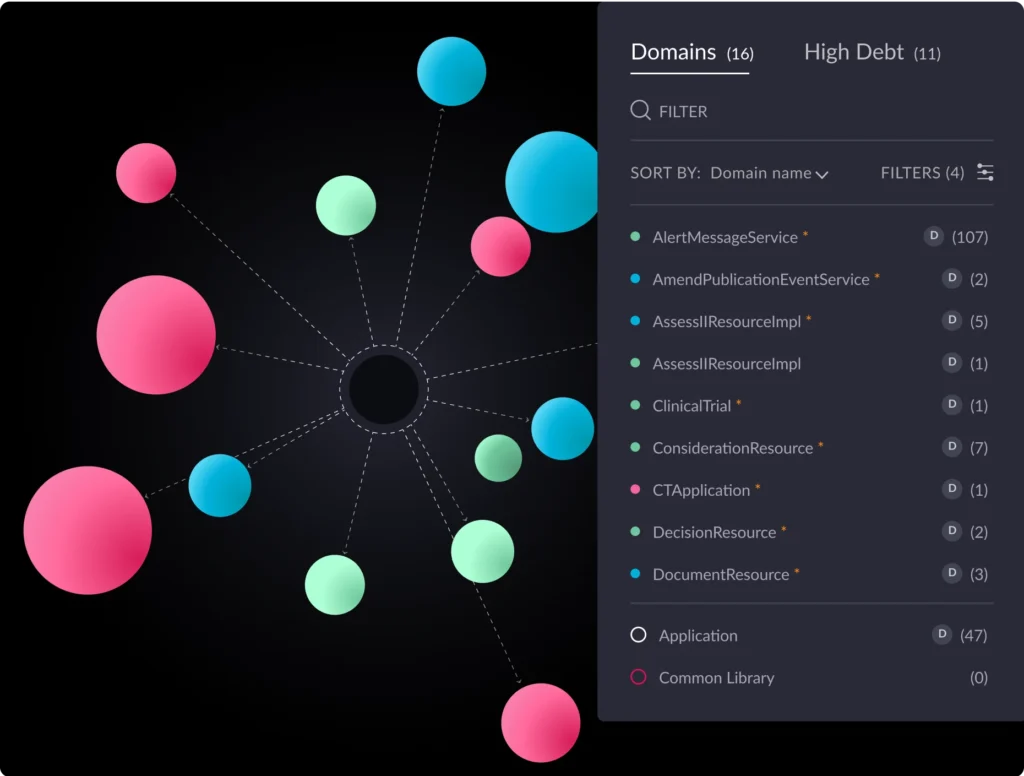
Modularize with an actionable modernization plan that prioritizes refactoring tasks based on business value and technical feasibility.
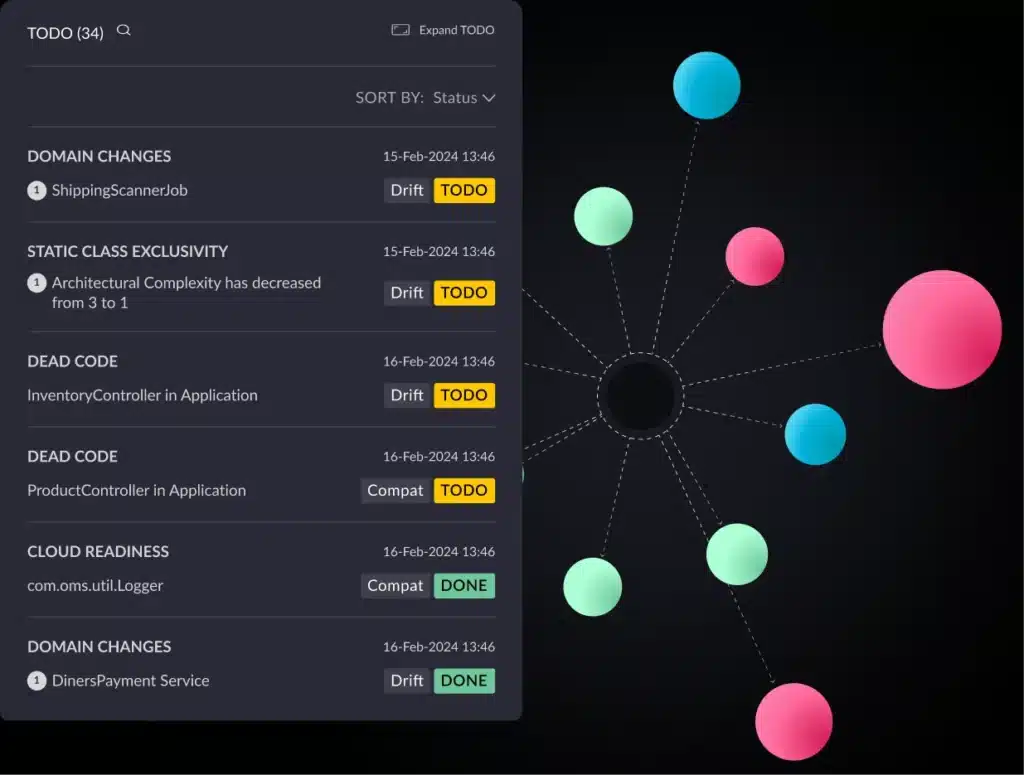
Accelerate with Amazon Kiro integration that transforms refactoring tasks into executable code changes. The combination of vFunction’s architectural intelligence and Amazon Kiros coding capabilities speeds modernization by orders of magnitude.
Extract services and transform for cloud with automated code generation that maintains functionality while restructuring for AWS-native deployment. vFunction handles the complexity of dependency management, interface definition, and deployment configuration.
This approach transforms modernization from a lengthy, risky manual process into a systematic, data-driven effort. Instead of guessing which parts of a monolith can be safely extracted as microservices, you have clear data about dependencies, architectural boundaries, and optimal AWS service targets.
AWS ISV Tooling covers vFunction licenses—up to $2M per qualified customer—making architectural modernization financially accessible while dramatically reducing project risk in terms of risk and expertise.
Conclusion
AWS application modernization is more than simply moving to the cloud. In most cases, it’s about transforming how applications are built, deployed, and operated to leverage modern architectural patterns and cloud-native capabilities.
AWS provides a comprehensive platform for modernization efforts, with services that address every aspect of the journey from assessment and migration to ongoing operations and optimization. But technology is only part of the equation. Successful modernization requires organizational change, skills development, and a systematic approach to managing complexity and risk.
The organizations that will thrive in the next decade are those that can adapt quickly to changing market conditions, scale efficiently to meet demand, and innovate rapidly to stay ahead of competition. Leveraging AWS for application modernization provides the foundation for these capabilities.
Ready to modernize on AWS? Request a demo to see how vFunction accelerates your AWS modernization journey with automated architectural analysis and transformation.
FAQs about AWS app modernization
What’s the difference between migrating and modernizing on AWS?
Migration moves applications to AWS with minimal changes, providing disaster recovery and cost benefits without altering how applications function. Modernization transforms application architecture to leverage cloud-native capabilities, such as microservices, serverless computing, and managed databases, for improved scalability and resilience.
How do I avoid downtime while refactoring a monolith?
Use incremental refactoring patterns, such as the Strangler Fig, to gradually extract microservices while keeping the original system running. AWS Application Load Balancer and API Gateway provide traffic routing during transitions. For detailed approaches, see our guide on simplifying monolith refactoring with AWS and vFunction.
Containers vs. serverless — when to choose which on AWS?
Containers (ECS/EKS) are best suited for predictable workloads that require consistent environments. Serverless (Lambda) excels for event-driven, variable traffic patterns where you want zero infrastructure management. The choice is control vs. convenience.
Can MAP funding apply to modernization?
Yes, AWS Migration Acceleration Program funding covers modernization activities as part of broader AWS migration projects. The program can offset assessment, planning, tools, and development costs. Learn more about AWS modernization funding programs and work with your AWS account team for specific eligibility requirements.
How does vFunction integrate with AWS tooling?
vFunction complements AWS services by providing architectural intelligence that informs modernization decisions.
This architectural insight helps guide modernization initiatives orchestrated through AWS Transform, ensuring workflows are driven by a clear understanding of application structure and dependencies. vFunction also generates service-specific refactoring tasks and architectural guidance that can be consumed by tools like Kiro and GenAI assistants, enabling more precise, architecture-aware modernization execution.

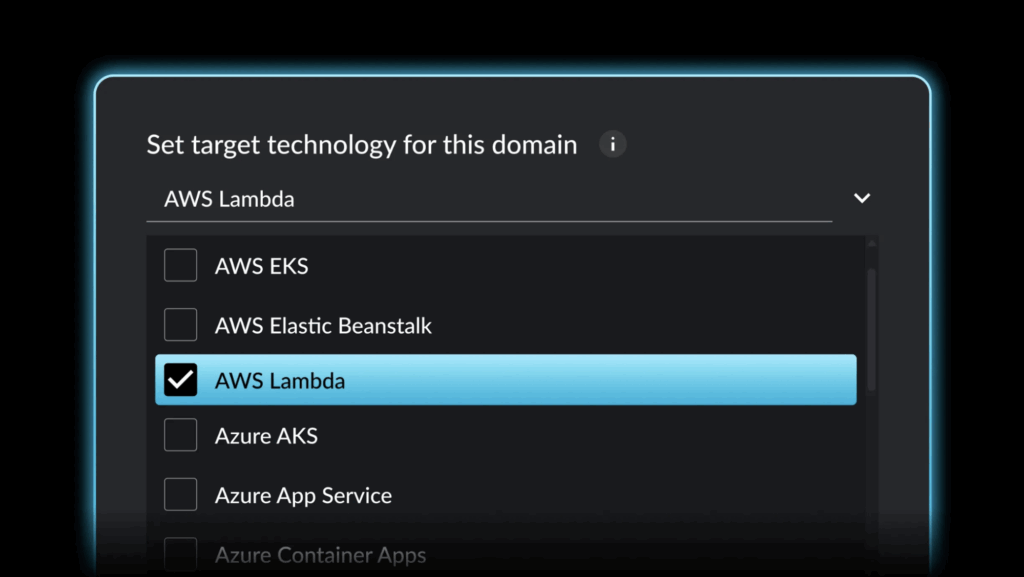
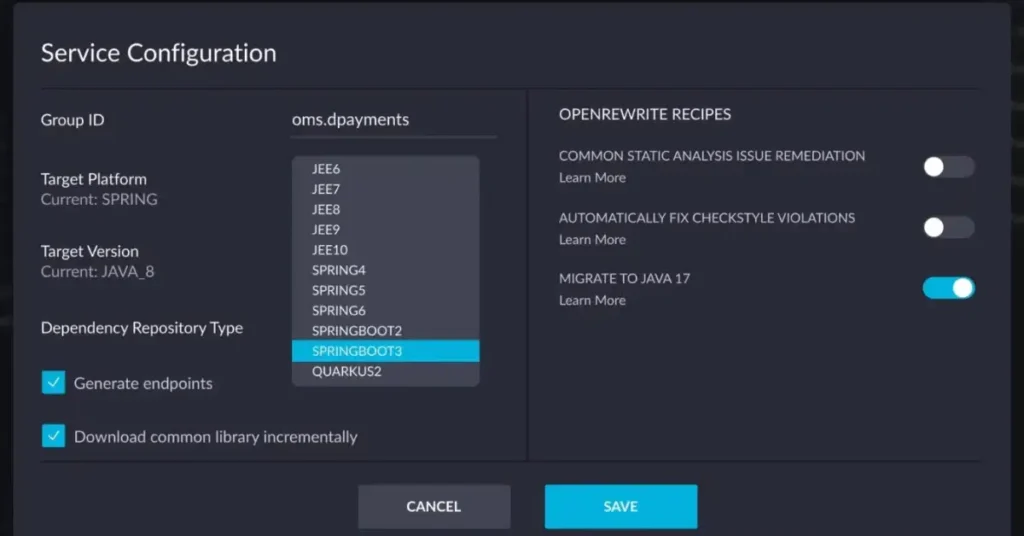
And also allows you to select a target technology for a specific domain, which then helps vFunction to drive further insights to assist with modernization: