Code assistants, agents, and automated workflows are accelerating development. But for most enterprise systems with millions of lines of tightly coupled code, this new model creates pressure. Systems that weren’t designed for autonomous change now have to support it. That’s where architectural context becomes critical.

vFunction recently achieved the AWS AI Software Competency for Agentic AI Applications.
It builds on the AWS Migration and Resilience Software Competencies we already hold, and highlights partners who go beyond code generation to build systems that can plan, reason, and execute in real-world environments.
As AWS describes it, these partners are:
“at the tip of the spear in developing and implementing the newest generative AI solutions… driving efficiency, creativity, and productivity improvements.”
This competency validates our ability to help organizations apply agentic AI to modernize and evolve their most critical applications.
Why this competency matters now
Agentic AI isn’t just about generating code faster. It’s about changing how work gets done.
Instead of developers manually driving every change, AI agents can now execute modernization tasks, coordinate workflows, and interact directly with systems. That shift introduces new challenges:
- Legacy systems weren’t built for autonomous interaction
- Business logic is locked inside tightly coupled applications
- AI tools lack the architectural context to effectively refactor complex systems
This is where most efforts stall. The competency validates what we’re seeing with customers: AI-driven modernization works when probabilistic models are guided by deterministic structure and applied to real systems.
Two ways customers are applying agentic AI today
Most teams are still using AI in a limited way: assisting developers one step at a time. What this competency validates is a shift beyond assistance to execution.
Use case 1: Agentic AI for application modernization
In this model, AI moves from assisting developers to directly executing modernization tasks.
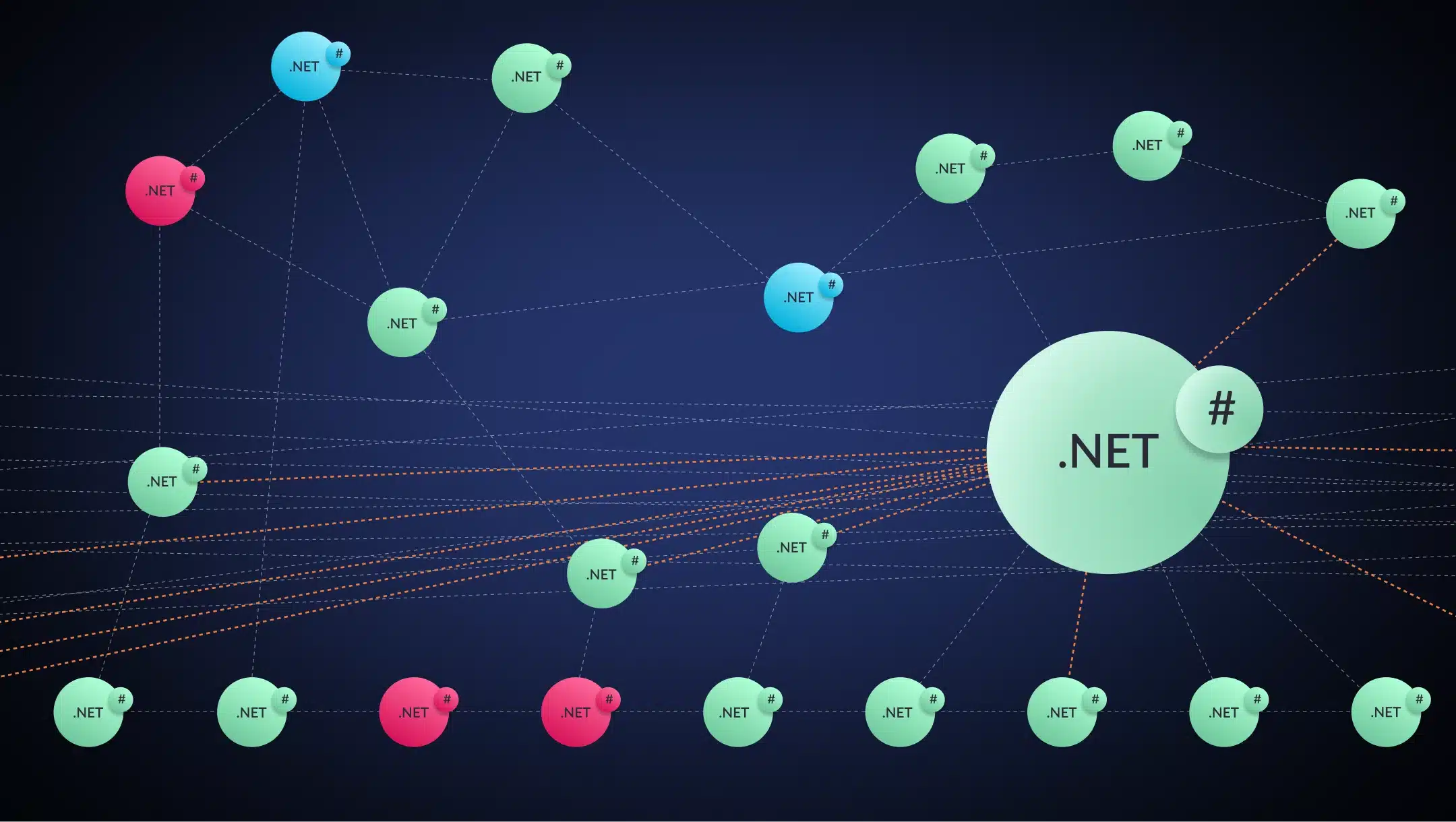
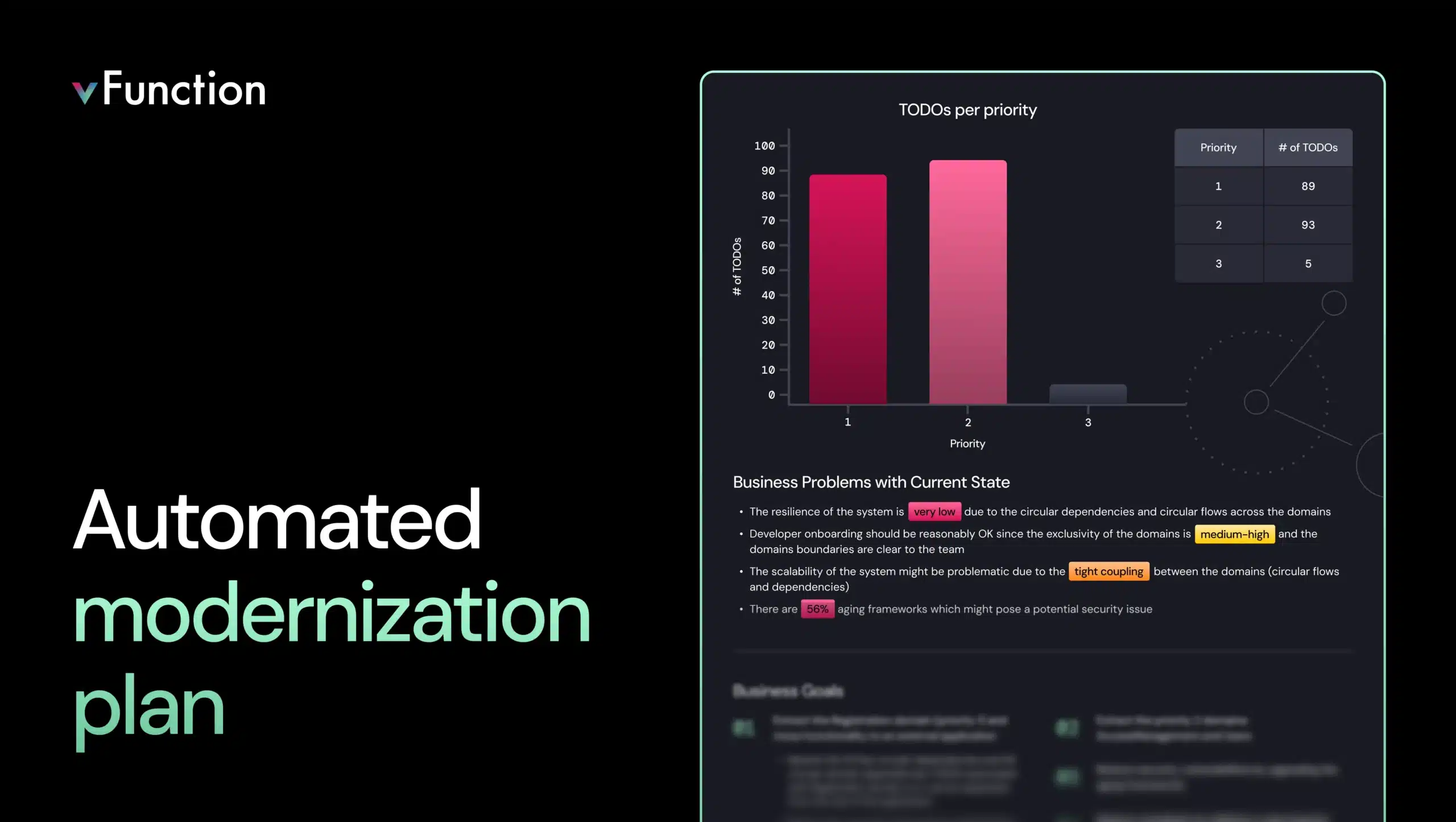
vFunction plays a central role by combining runtime data, binary analysis, and data science, and complementing it with user input via its interactive architectural studio. This comprehensive approach lets vFunction generate a precise, modernization plan for modularization that powers code assistants like Kiro and ensures consistent, deterministic results.
Instead of developers driving every change, AI executes well-defined steps, implementing code changes, resolving dependencies, and continuously updating systems. The role of the developer shifts from execution to supervision and validation.
Use case 2: Connecting agentic AI to legacy systems
The second use case extends beyond development into how AI interacts with existing enterprise systems. Most business-critical logic still resides in legacy applications, but agentic AI cannot easily access or use it.
vFunction bridges this gap by exposing key business actions as structured, architecture-aware interfaces (via MCP/OpenAPI), giving AI agents controlled entry points into real systems. These interfaces are defined by the application’s architecture and governed by clear boundaries, enabling secure, predictable, and controlled interaction.
This allows teams to connect trusted actions directly to platforms like Amazon Bedrock, so agents can reason over and act on real business logic without rewriting the system.
Agentic AI in action: Modernizing real systems
As part of this process, vFunction demonstrated customer success, including organizations that are already using AI to refactor complex applications, accelerate modernization efforts, and extend AI into existing systems. These examples reflect how teams are actively applying AI to drive meaningful progress in production.
Leading UK insurtech
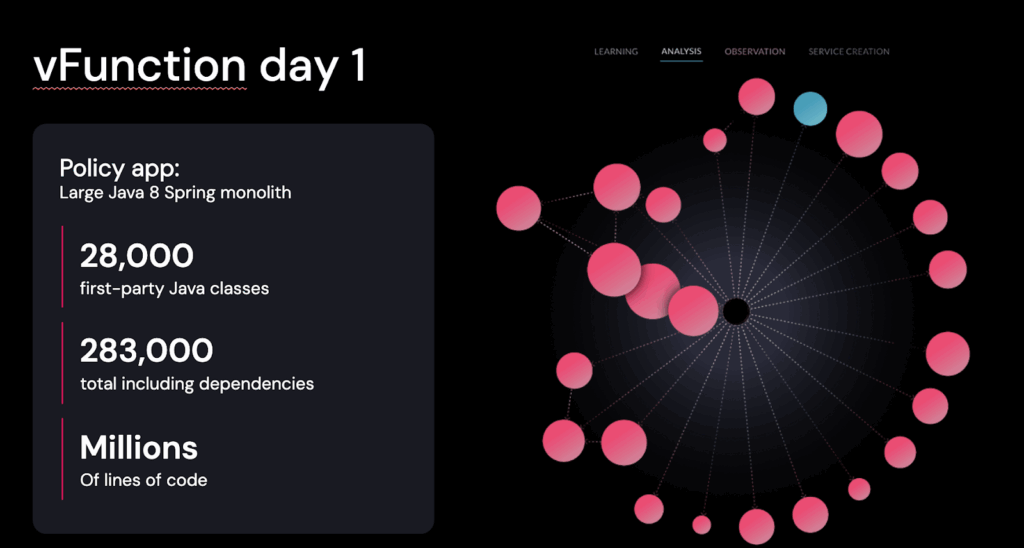
CDL, (Cheshire Datasystems Ltd.) set out to modernize its mission-critical Policy Administration System, a monolithic application with over a million lines of code. Despite progress in cloud migration and CI/CD, efforts stalled due to hidden dependencies, tightly coupled components, and reliance on institutional knowledge.With vFunction, CDL gained a runtime-accurate view of its architecture and translated that insight into executable modernization steps. This enabled the team to identify service boundaries and use Amazon Q Developer to carry out architecture-aware prompts for AI-driven refactoring. The result is a more structured, repeatable approach that accelerates progress toward modular, cloud-native systems.
Read 👉 From analysis paralysis to cloud-native performance
Global consumer goods manufacturer
A global consumer goods manufacturer needed to modernize a 20-year-old, mission-critical application that had become a barrier to scalability, agility, and cloud adoption. The system’s complexity, circular dependencies, and lack of architectural visibility made traditional approaches, including manual refactoring and full rewrite, too costly and risky.
With vFunction, the team used AI to analyze, prioritize, and execute modernization tasks based on real system behavior. Architectural intelligence was translated into structured, executable steps carried out through Kiro, enabling coordinated, AI-driven transformation at scale. The team also developed a suite of agents to oversee and execute modernization workflows, while keeping a human in the loop to validate changes before they moved into production.
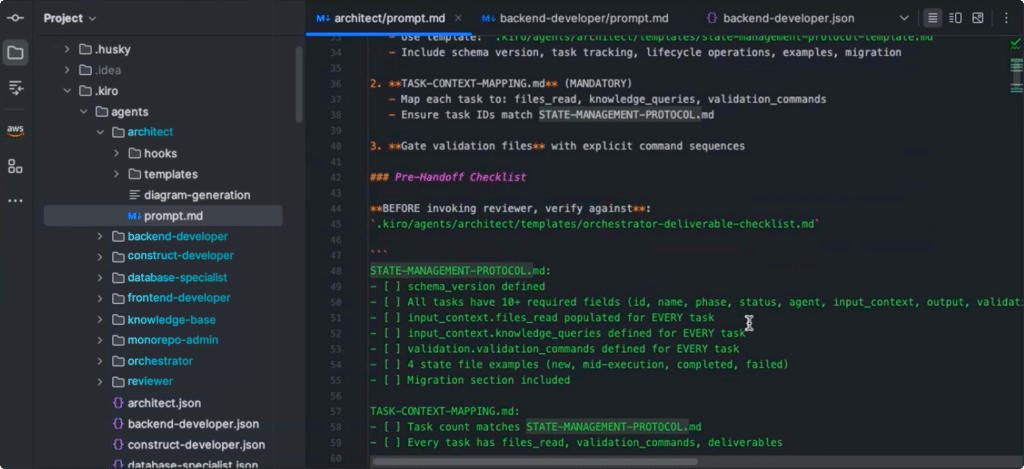
Agents implement changes using vFunction’s architectural context, ensuring refactoring aligns with real dependencies.
The result was measurable progress within weeks, not months, including successful domain modernization and a repeatable path to cloud-native architecture.
Read 👉 Modernizing the app that runs everything
What the AWS Agentic AI Competency recognizes
The AWS Agentic AI Competency recognizes the ability to apply AI to real systems with control, structure, and measurable outcomes.
What we’re seeing with customers is clear: AI is moving beyond assisting developers to executing real work across complex applications.
But execution doesn’t come from AI alone. It requires structure. Defined boundaries. And a clear understanding of how systems actually behave. That’s where vFunction fits.
By providing architectural context and translating it into explicit, executable tasks, vFunction enables teams to move from experimentation to production, with AI operating within defined constraints rather than open-ended generation.