Learn how vFunction helped the software company behind Europe’s most respected automotive brands modernize its platform for the next generation of connected vehicles.
Overview
As vehicles become software platforms, competitive advantage is defined by how quickly code can evolve and reliably power digital experiences, from over-the-air updates and driver personalization to advanced driver assistance and predictive maintenance.
At the center of this shift is a European enterprise formed to unify and accelerate software development across a global automotive ecosystem. Though less than a decade old, the organization already serves tens of millions of vehicles worldwide with uncompromising standards for safety, reliability, and long-term maintainability.
A platform central to global vehicle experiences
Built primarily in Java, the platform comprises approximately 30,000 classes and over 11 million lines of code. To support global user operations, it is deployed as a distributed monolith across multiple Docker containers.
Frequent releases and rapid growth led to significant architectural complexity and technical debt, constraining engineering velocity and making the platform increasingly difficult to evolve. Senior architects and engineering leaders faced a growing challenge: how to modernize the system into discrete services and migrate to scalable, cloud-native platforms, such as Amazon Elastic Kubernetes Service (EKS), without disrupting global vehicle experiences or introducing unacceptable risk to the platform or to vehicles.

The question was no longer whether to modernize, but how to do so safely and deliberately.
The organization launched a modernization initiative focused on platform components responsible for user enrollment. To ground modernization in the running system rather than assumptions, the team adopted vFunction.
Understanding why modernization stalled
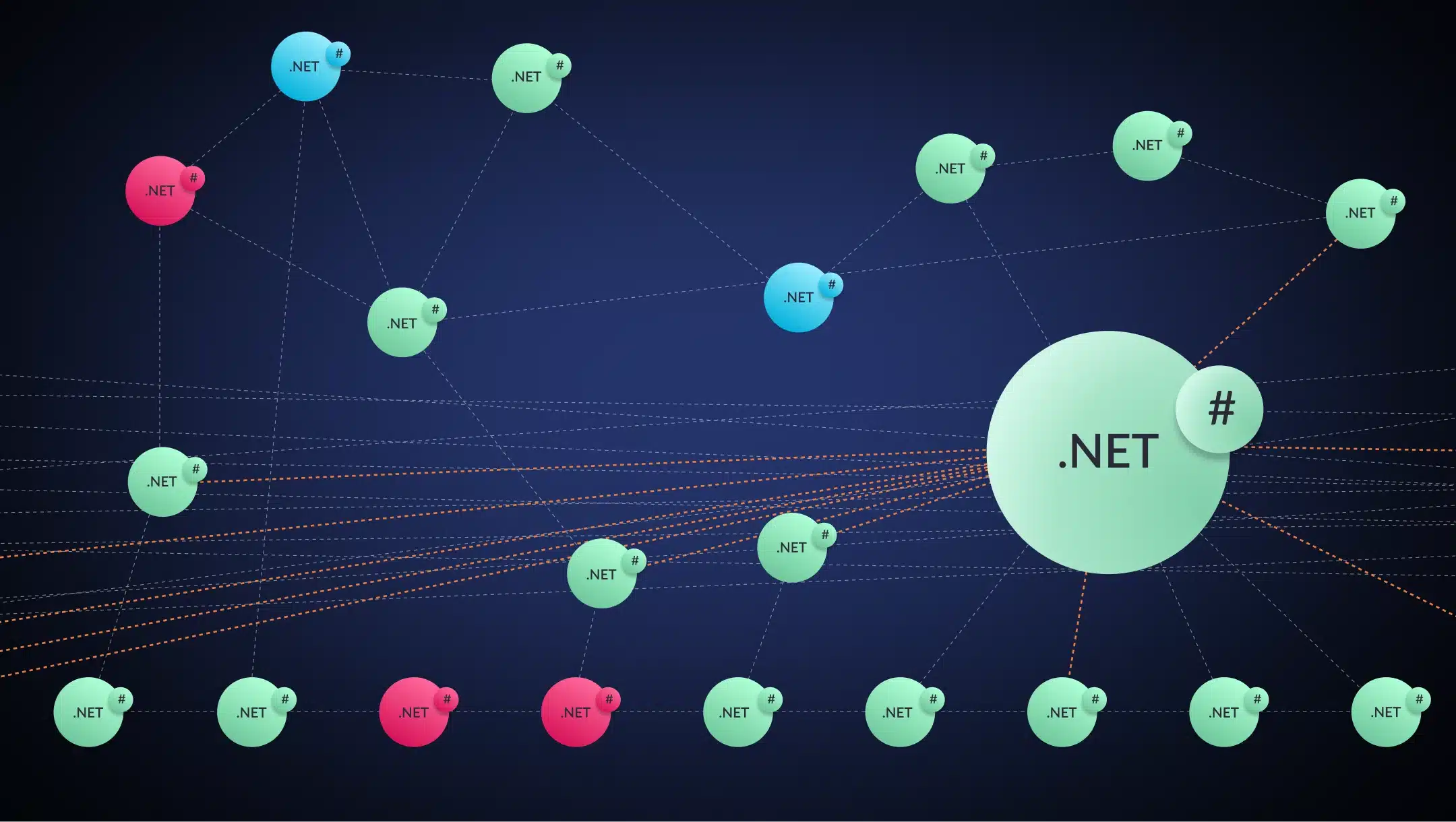
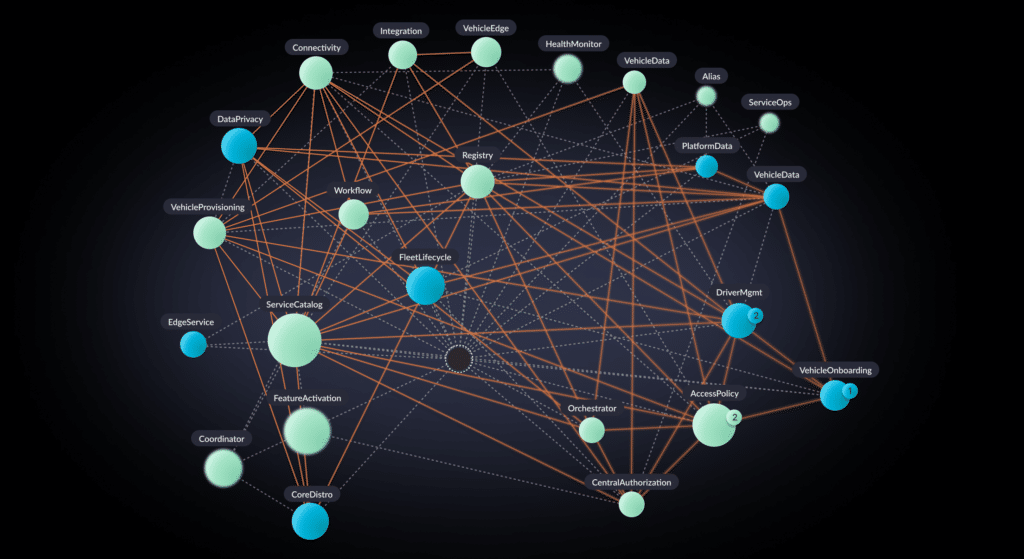
Initial analysis of the application’s enrollment components revealed dozens of tightly interwoven domains linked by circular dependencies and execution flows, which explained why earlier service-extraction attempts had repeatedly stalled. While the measured architecture accurately reflected production behavior, it was too complex to serve as a workable starting point for modernization planning. What was needed was a higher-level, domain-aligned architectural view that could clarify boundaries and guide safe service extraction.
Support through AWS
The modernization effort was supported by AWS, including participation in the AWS ISV Tooling program, which enabled the automotive team to invest in deeper architectural analysis with vFunction before committing to large-scale refactoring. Operating at a global scale, with most services running on AWS, architectural clarity was essential not only to modernize reliably but also to optimize cloud costs, improve scalability, and establish a foundation for AWS-native evolution.
The turning point
At this stage, engineering leaders took a deliberate step back. Rather than pushing forward with a highly granular domain model, they asked a more practical question:
What is the simplest structure we can use to plan modernization and actually begin execution?
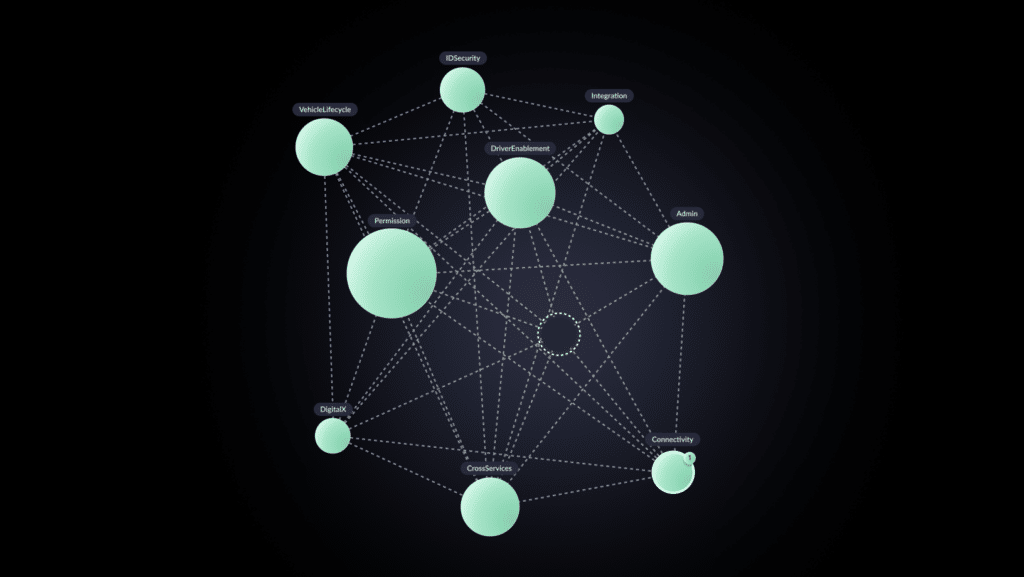
Using vFunction’s interactive architectural studio, the team grouped components into nine high-level business-aligned domains, establishing a target architecture aligned with their platform evolution strategy.
A new way of planning modernization
With a precise, system-derived view of runtime behavior in place, the team used the vFunction Agent not to generate new code, but to automatically shape the domain model based on application team specifications.
By combining measured architectural reality with documented design intent and validating results through engineering oversight, the vFunction Agent consolidated dozens of tightly coupled clusters into nine business-relevant domains defined by subject-matter experts. The result was a simplified target architecture that preserved structural integrity while enabling cross-team alignment and modernization planning. Yet, the dependencies between the nine domains still remain complex with circular dependencies and flows. This will be addressed by refactoring in accordance with the TODOs identified in vFunction.
With a workable modernization model in place, the focus shifted from understanding the problem to acting on it.
The changing economics of modernization
The platform had historically relied on large engagements with systems integrators, with annual modernization budgets reaching tens of millions of dollars.
Once the architecture was measured in production and validated with engineering teams, leadership gained clarity into structural boundaries and refactoring efforts.
Within weeks, it became clear that modernization could be executed differently.
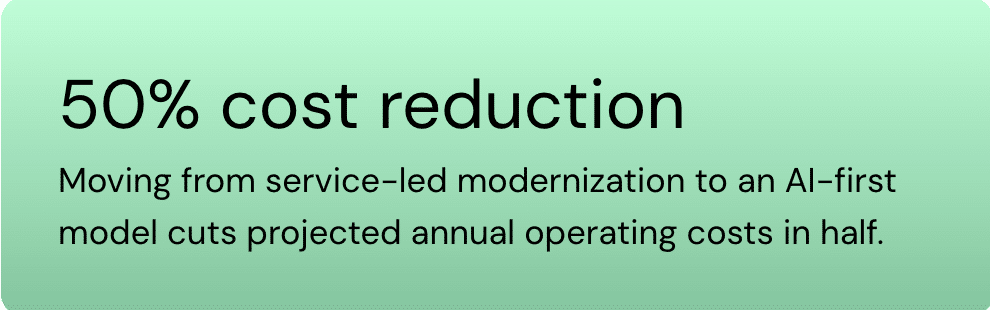
The organization shifted toward an AI-first execution model using vFunction’s structured modernization plan to guide AI-assisted refactoring and internal delivery.
Post modernization and platform consolidation, the projected annual maintenance and operating budget for this platform was reduced by half.
Moving forward from a shared vision
Although the transformation is ongoing, the impact of architectural visibility and a clear, workable modernization plan is already evident:
- Circular dependencies are explicitly identified and understood
- Architectural boundaries are shared and aligned across teams
- Engineering discussions are grounded in measured data, not interpretation
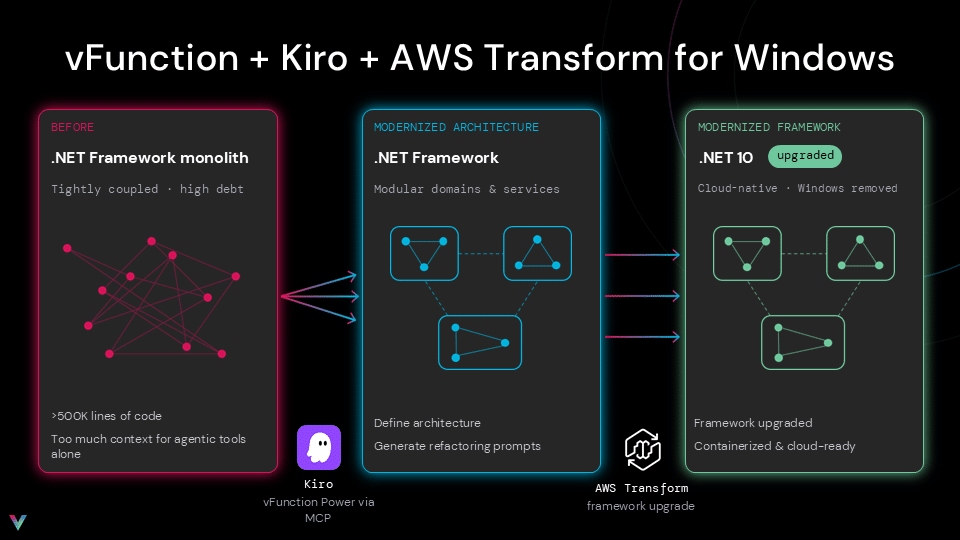
With architecture made explicit, the team is now executing through a Kiro-based, agentic workflow. Guided by a structured modernization blueprint, they are accelerating refactoring while deliberately evolving a platform designed to scale across tens of millions of vehicles worldwide.